

How To Design A Successful Oil Analysis Program: Choose an Oil Analysis Lab If it is determined that contracting an outside lab is the best course for your oil analysis program, care must be taken to insure that the lab is a good fit for your company. It is important to match a lab with…
Read more
How to Design a Successful Oil Analysis Program: Determine Test Packages
How to Design a Successful Oil Analysis Program: Determine Test Packages Oil analysis test packages should be carefully considered. Different equipment have different test profile requirements. When determining what test packages to choose, the actual equipment and the surrounding environment should dictate what tests are appropriate. Keep in mind that with oil analysis your goal…
Read more
How To Design A Successful Oil Analysis Program: Identify Critical Equipment
How To Design A Successful Oil Analysis Program: Identify Critical Equipment When you start implementing an oil analysis program, you need to decide what equipment in the plant to sample. This can be a daunting task but it cannot be overlooked. Supervisors and management need to take the time to identify the targeted equipment, write…
Read more
Gear Up For Reliability: Using Oil Analysis & Contamination Control to Improve Gearbox Health
Gear Up For Reliability: Using Oil Analysis & Contamination Control to Improve Gearbox Health Gearboxes are marvels of design and engineering. To ensure reliable operation, there must be a concentrated focus on ensuring the gearbox's health. Effective contamination control, combined with a well designed oil analysis program, can dramatically improve reliability, reduce waste, and provide…
Read more
Don’t Risk Lubrication Contamination
Don't Risk Lubrication Contamination Contaminated lubricants account for nearly half of all lubricant related failures. Lubricants become contaminated with either solid or liquid contaminants. Solid contaminants act as abrasives causing severe damage to internal components. Solids also clog filters and orifices restricting oil flow and resulting in lubricant starvation. Liquid contaminants such as water will…
Read more
When Routine Oil Analysis Isn’t Enough, Get Answers With MIA
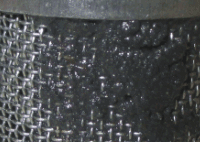
When Routine Oil Analysis Isn't Enough, Get Answers With MIA Case Study: Hydrogen Sulfide Gas Compressor A sample of Royal Purple Synfilm NGL 100 from a hydrogen sulfide gas compressor was submitted for Material Identification Analysis (MIA) testing. It was reported that the oil heat exchangers appeared to be clogging which reduces flow and cooling.…
Read more